Investing & retirement resources
Investing & retirement resources
Financial guidance for Gen Z: Start small, think long term
Key takeaways
- Gen Z finances are a work in progress. Many young adults are taking steps to earn more, but making the most of that extra income means balancing today's financial needs with their longer-term goals.
- Starting early gives your money more time to grow. Even small contributions toward retirement savings or other long-term goals have the potential to add up over time.
- Financial advice for young adults can help turn goals into a plan. A financial professional can help you prioritize competing needs, make informed decisions, and prepare for the future.

Many Gen Z adults are working to improve their finances by looking for better-paying jobs, earning extra income, or developing new skills. You might be one of them. But with the cost of everyday essentials like groceries, gas, and rent continuing to rise, it can be difficult to look beyond your immediate financial needs and think about the future.
Nationwide's Financial Growth & Protection Index, powered by the Nationwide Retirement Institute®, reflects Gen Z’s short-term focus. In fact, 61% of the young adults we surveyed said they primarily make financial decisions looking less than a year ahead.
You don't need a big paycheck or a perfectly organized financial life to begin thinking further ahead than the next month or two. Whether you're earning more or simply trying to make the most of what you have, a financial professional can help you consider how the choices you're making today fit with your longer-term goals, from building savings and managing debt to investing for retirement.
Gen Z is taking action to improve their financial position
According to our research, 68% of Gen Z adults looked for higher-paying jobs or additional income in the past year, and half earned money beyond their primary income source. Another 49% invested time or money in developing skills to increase their earning potential.
Those efforts could open up better-paying career opportunities or provide additional income to put toward financial priorities. But with everyday expenses continuing to rise, making financial progress isn’t always as simple as earning more.
Deciding how to use that extra income starts with identifying your priorities. Paying down high-interest credit card debt could save you money on interest, while building an emergency fund can help you cover unexpected expenses without borrowing. A financial professional can help you balance those immediate needs with saving for bigger milestones, such as buying a home or preparing for retirement.
Gen Z spending habits are often focused on the near term
Some financial goals take years, even decades, to achieve. Putting off planning until those goals are closer at hand could leave you with less time to prepare and fewer options. But thinking that far ahead can be difficult when you're worried about making ends meet today.
And you’re not alone. Nearly seven in 10 (69%) Gen Z adults experienced a significant increase in essential living expenses over the past year, according to our research, and 46% worry about their finances every day. Those pressures may help explain why so many young adults are making financial decisions with only the next year in mind.
But even when your immediate financial needs take priority, you can still take small steps to prepare for the future. If you receive a raise, earn a bonus, or bring in extra money from a side hustle, setting aside even a small portion could give you a head start without requiring major changes to how you're managing your money today. A financial professional can work with you to review your income and expenses, identify opportunities to save, and develop a plan that accounts for both your current needs and future goals.
Time is on your side: The power of compound interest
When it comes to investing, Gen Z has one significant advantage: time. The earlier you start, the more years your money has to potentially grow through compounding.
You may be familiar with the concept of compound interest, which is when you earn interest on both your original contribution and the interest that money earns over time. Investing works similarly: Your investment earnings have the potential to generate additional earnings. Over many years, that growth can build on itself, potentially increasing how much you accumulate for retirement or another long-term goal.
The chart below shows a conservative approach to how starting to invest earlier could give your money more time to grow before retirement.
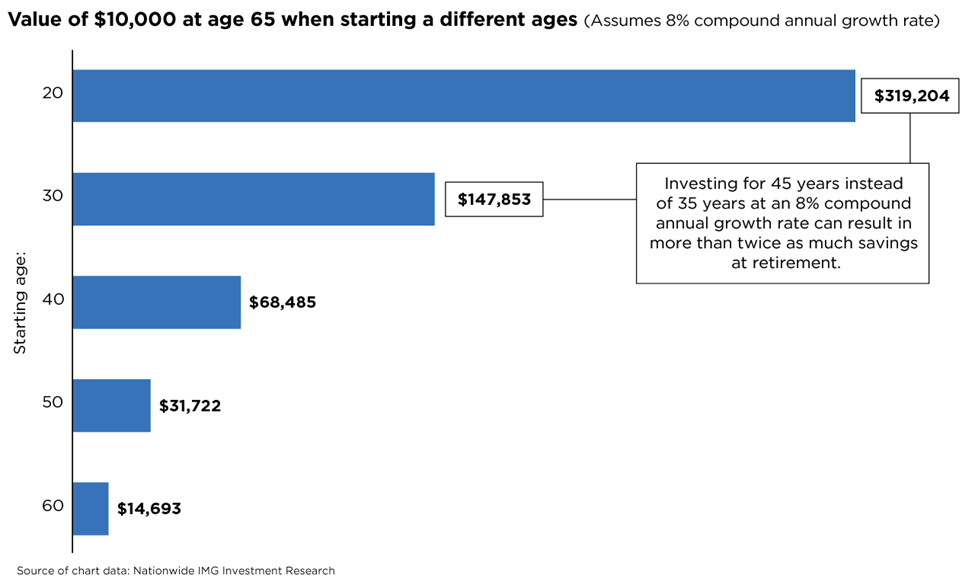
Hypothetical example for illustrative purposes only. Assumes a constant 8% annual return, does not reflect fees, expenses, taxes, or market volatility, and is not intended to predict future investment performance. Actual results will vary.
You don't need a lot to get started, either. You might begin with small contributions to an individual retirement account or to your retirement plan at work, then gradually increase them as your income grows. Even modest contributions can add up over time, especially when you have decades to go before retirement.
Having more time may also give your investments a greater opportunity to recover from market downturns. Still, time doesn't eliminate investment risk or guarantee you'll recover your losses. Your investment decisions should reflect both when you'll need the money and your comfort level with risk. A financial professional can explain your investment options and the risks involved, so you can make informed decisions based on your goals and circumstances.
Small steps today can make a big difference tomorrow
Earning more and making smart financial decisions today are important steps toward building a stronger financial future. Creating a plan can help you turn those individual efforts into progress toward the goals that matter most to you.
And you don't have to figure everything out on your own. Nationwide's research found that 45% of Gen Z adults want to work with a financial professional, compared with 30% of adults overall. If you're ready to start planning for your future, consider talking with a financial professional.
Want to work with a financial professional?
Call 1-877-245-0761
Call 1-877-245-0761