

All farm and ranch insurance Insurance by farm type
Property and liability insurance
Vehicles and equipment insurance
Financial services
All farm and ranch insurance All commercial agribusiness insurance All agribusiness risk management
Farm & agribusiness resources
Farm & agribusiness resources
Section 179 deductions for farm machinery and equipment in 2027
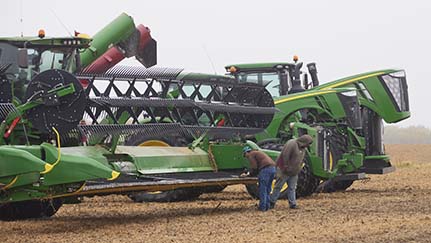
2026 has been a financially challenging year for many U.S. farmers and ranchers. But this year's version of the Internal Revenue Service (IRS) code can offer savings on the big-ticket purchases you need to keep your operation running in the new year.
Section 179 of the Internal Revenue Code (IRC) enables farmers to deduct the cost of qualifying equipment as a business expense in the year it is placed in service, subject to applicable limitations, instead of depreciating it over several years. This can create meaningful tax savings on farm machinery, equipment, software, and certain building purchases made before the end of the calendar year. The One Big Beautiful Bill Act (OBBBA) signed into law on July 4, 2025, expanded Section 179 benefits, and those higher limits continue to shape how farmers plan equipment purchases heading into the 2027 tax year.
Here's what farmers and ranchers should know to make informed decisions and take full advantage of the potential tax savings available under this section of the code.
How does Section 179 work for farmers in 2027?
Section 179 allows a farmer to deduct the full purchase price of a qualifying business asset like a tractor or combine as a business expense in the year it is placed in service, subject to applicable limitations. Congress originally enacted the provision in 1958 to encourage business investment, and the OBBBA raised the spending caps significantly starting in 2025.
According to Section179.org, for the 2026 tax year, the maximum Section 179 deduction cap is $2,560,000. That amount phases out dollar-for-dollar once qualifying property placed in service exceeds $4,090,000. Utility vehicles that qualify as applicable property carry an additional cap of $32,000. Because Section 179 limits are adjusted annually for inflation, the Internal Revenue Service (IRS) typically doesn't finalize the official 2027 figures until later in the year. Farmers planning 2027 purchases should treat the 2026 numbers as a working benchmark and confirm the finalized 2027 amounts with a tax professional before filing. Section 179 deductions generally cannot exceed taxable income from the active conduct of a trade or business, and unused amounts may generally be carried forward to future tax years.
What property qualifies for a Section 179 deduction?
Section179.org shows qualifying property generally includes:
- Farm machinery, equipment and some vehicles
- Computers, software and office equipment
- Purchased breeding livestock used in the farming operation may qualify, subject to IRS requirements
- Certain agricultural structures, including qualifying grain bins and other eligible farm-use structures, may qualify under Section 179 rules
- Tangible personal property that doesn't include buildings or structural components of a building
- Qualified real property or improvements to nonresidential real property (general real estate doesn't qualify)
- Purchased property used in the active conduct of a business more than 50% of the time
- Property acquired from an unrelated person
When farmers should use Section 179 and when to hold off
Section 179 gives buyers flexibility to decide which purchases to deduct now and which to reserve for future tax years. In year-over-year tax planning, farmers and ranchers should work with their tax professionals to determine how and whether to divide the Section 179 deduction across specific purchases.
While the tax incentives under Section 179 are appealing, farmers and ranchers should consult with their trusted financial advisors before making any decisions, especially when planning to pass farm assets down to the next generation, according to Tom Duncan, Senior Director of Nationwide's Advanced Consulting Group.
"Section 179 is certainly a powerful tool for farmers, but it also comes with some items to watch out for," Duncan said. "It is crucial that you are working with a tax professional as well as considering your cash flow, potential risks, and future plans."
How can I learn more?
While you connect with your tax professional to determine if Section 179 deductions, bonus depreciation or other deductions are right for you, find more helpful information in the IRS Farmer's Tax Guide. Find other ideas to fuel smart financial planning while protecting and strengthening your operation at AgInsightCenter.com.
Get more information
Get connected to financial specialists who can help protect your farm, family and future by visiting Nationwide.com/YourLand.